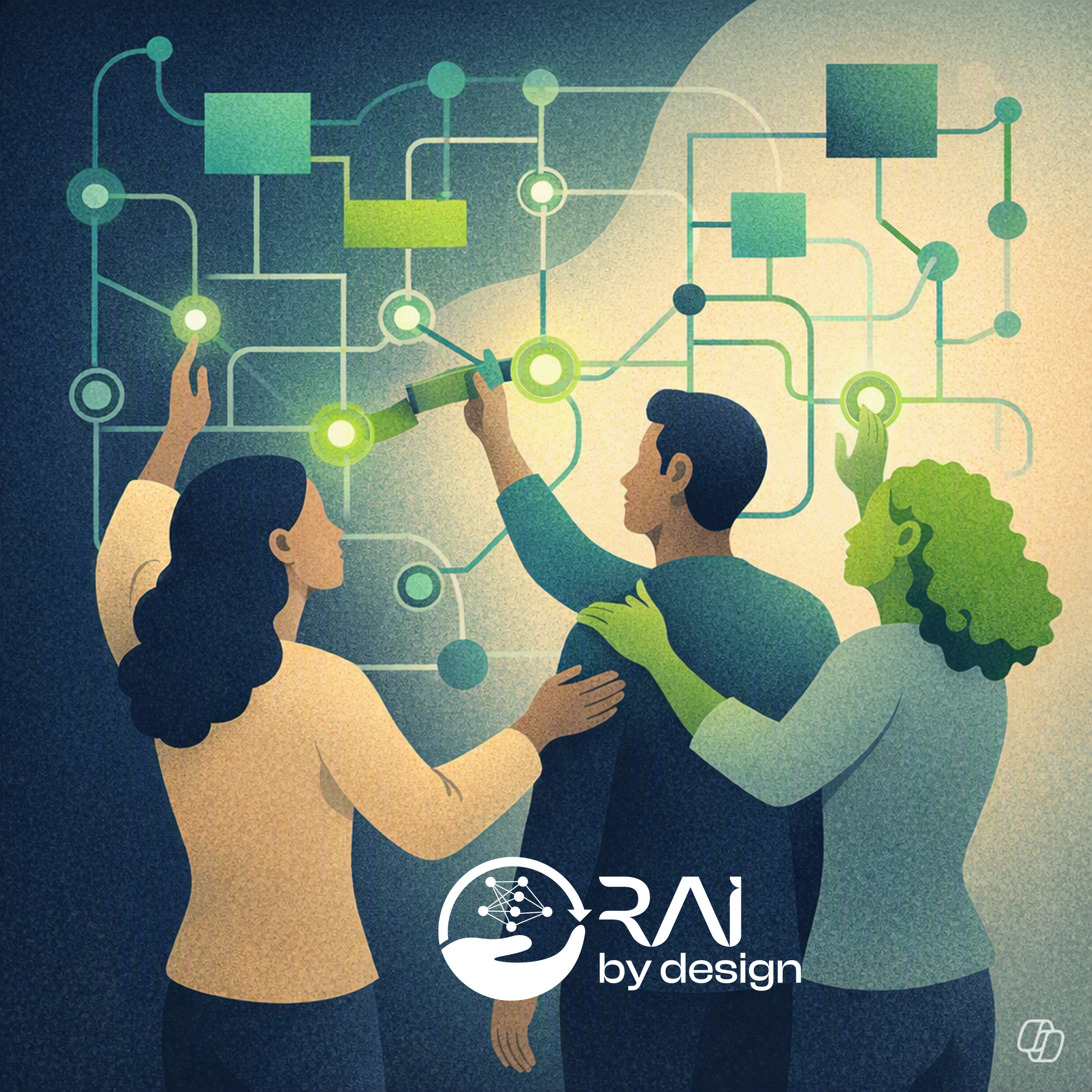
Responsible AI isn’t just a framework. It’s a human change challenge.
Key Responsible AI Principles That Really Matter.
AI doesn’t fail because of one issue—it fails when key responsibilities are treated in isolation or addressed too late. Accountability, transparency, privacy, safety, fairness, inclusiveness, and sustainability are not separate checkboxes; they are the foundations of AI systems that stand up to real-world use.
Regulators expect clear, end-to-end governance. Investors look for products that are not only innovative, but resilient, scalable, and defensible. And for teams building and adopting AI, the challenge is making all of this practical—without slowing down delivery or over-engineering the solution.
At RAI By Design, we help organisations bring these principles together in a way that is proportionate, actionable, and tailored to how your teams actually work - and appropriate to the AI system - there is no “one-size fits all” approach. Each area plays a critical role—but it’s how they connect that builds AI systems people can trust, use, and rely on.
Explore each principle to see where to focus, what good looks like in practice, and how to move forward with confidence.

Unsure if you are doing the right things or see areas you’d like to focus on more?
Let’s chat it through together.
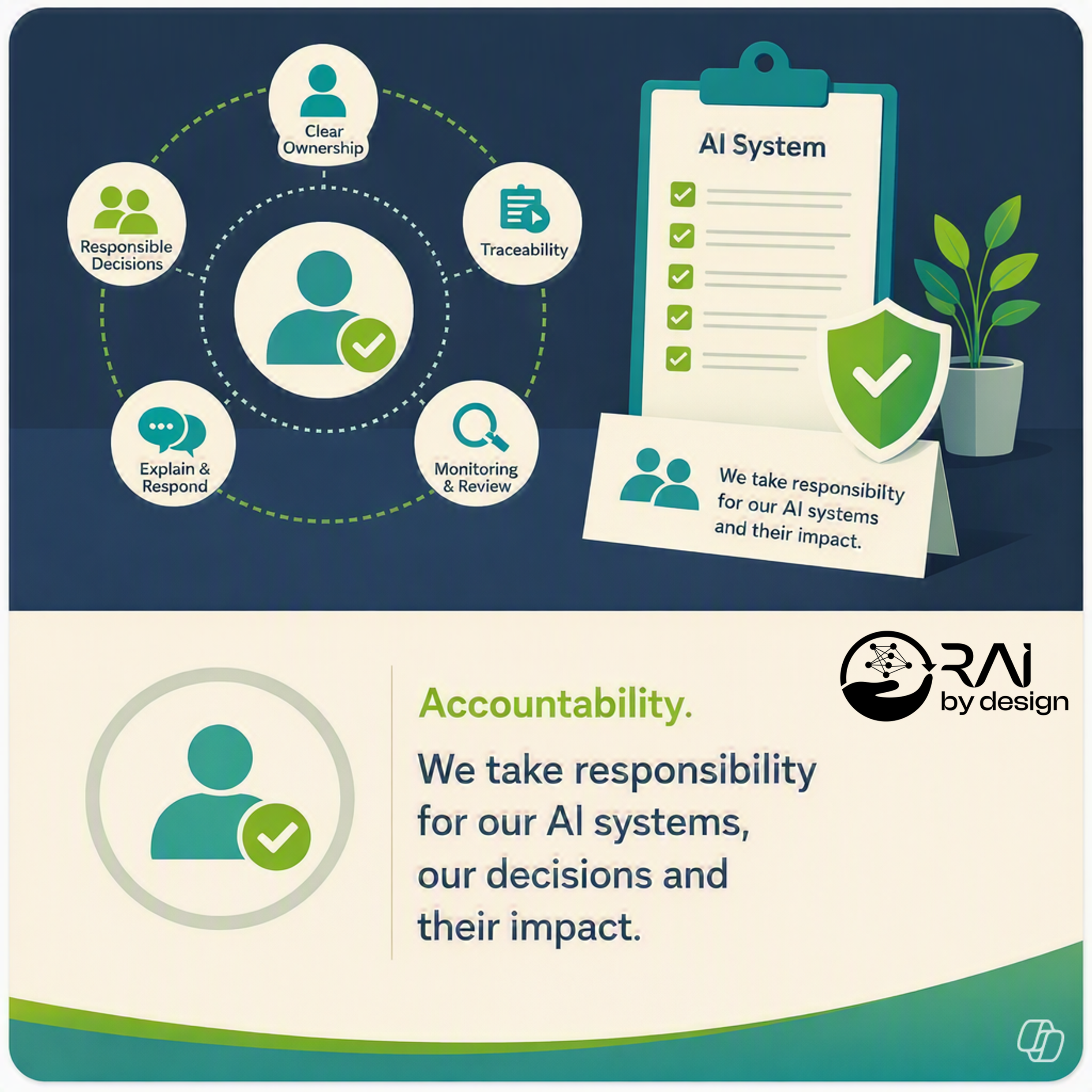
Accountability isn’t about adding process—it’s about giving you confidence that your AI will stand up in the real world.
Regulators expect clear evidence that risks are understood, managed, and monitored over time.
Investors are increasingly looking for signals that AI systems are not only innovative, but governable and resilient under scrutiny.
And for teams building AI, accountability is what turns uncertainty into clarity—helping you make deliberate decisions, avoid costly rework, and ship with confidence.
We work with organisations to put proportionate, practical structures in place—from impact assessments and oversight of higher-risk use cases, to stronger data governance and clearly defined roles—so you can demonstrate control, build trust, and move forward knowing your AI systems are fit for purpose and aligned with legislation, international standards and best practices - throughout the lifecycle of your AI system.
Accountability topics for consideration:
Impact Assessments and Responsible Release Criteria
Oversight of any significant adverse impacts
Ensuring your AI Systems/Use Case is “fit for purpose”
Strong data governance and management
Human oversight and controls
Clear roles and responsibilities (dedicated or fractional)
Proportional documentation
Purposeful design decisions
Consideration of upstream and downstream supply chain providers or third parties.

Got this fully covered or not sure?
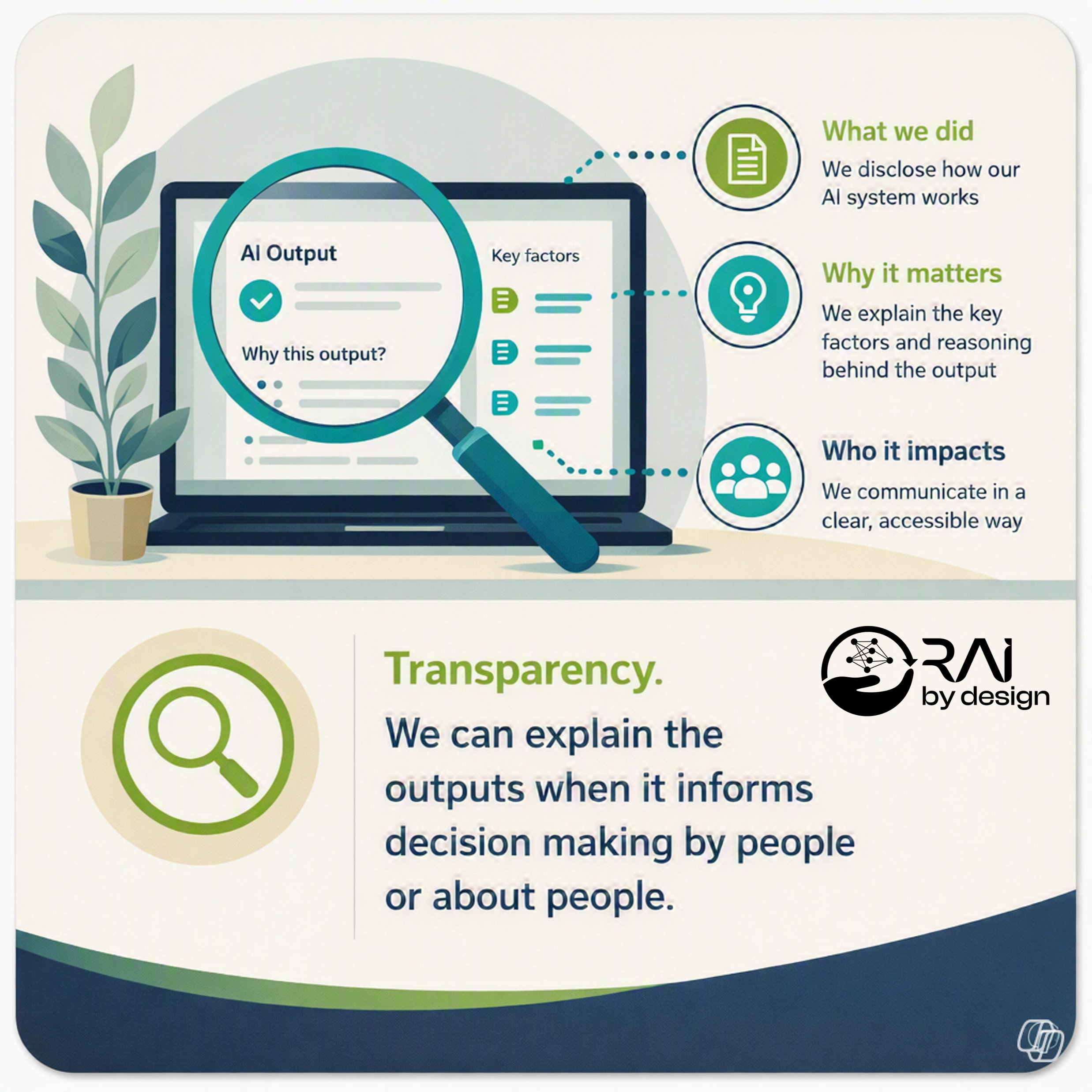
Transparency isn’t about overloading people with technical detail—it’s about making AI understandable, usable, and trustworthy in practice
Regulators expect organisations to clearly explain how AI systems operate, how decisions are made, and where risks may arise.
Investors increasingly look for evidence that AI products are interpretable and can withstand scrutiny as they scale.
For teams building AI, transparency reduces ambiguity—supporting better design decisions, stronger evaluation, and fewer surprises post-deployment.
And for users adopting AI, it builds the confidence to rely on outputs, challenge them where needed, and stay in control.
We help organisations embed practical transparency—from intelligible system design and clear user interactions, to evaluation plans, disclosure of AI use, and ongoing monitoring—so your AI is not only compliant, but understandable, governable, and trusted in real-world use.
Transparency topics for consideration:
System intelligibility for decision-making
Suitable user experiences, features and reporting
Appropriate Responsible Release Criteria
Evaluation plans
Stakeholder communications
Stakeholder training and automation bias awareness
Disclosure of AI interaction
Clear roles and responsibilities (dedicated or fractional)
Continuous monitoring and improvement

Not sure how transparent your AI needs to be?
Let’s map it out together.

Privacy and Security aren’t just compliance requirements—they’re foundational to trust, resilience, and long-term adoption of AI
Regulators expect organisations to demonstrate lawful, controlled, and well-governed use of data, with safeguards in place from design through to deployment.
Investors increasingly look for assurance that AI systems are built on secure, privacy-aware foundations that reduce risk exposure and protect reputation at scale.
For teams building AI, embedding privacy-by-design and strong security controls early avoids costly rework and strengthens product integrity.
And for users, it provides confidence that their data is handled responsibly and their rights are respected. We help organisations integrate practical privacy and security measures across the lifecycle—from compliant data use and governance, to robust safeguards, oversight, and continuous monitoring—so your AI systems are not only compliant with frameworks like GDPR and ISO/IEC 42001, but secure, resilient, and trusted in real-world use.
Privacy & Security topics for consideration:
Privacy compliance in AI systems
Privacy-by-Design and Privacy-By-Default
Lawful and responsible data use (ie. GDPR)
Transparency and user rights
Security and safeguards
Stakeholder communications
Clear roles and responsibilities (dedicated or fractional)
Continuous monitoring and improvement
Not sure how strong your AI privacy and security foundations are?
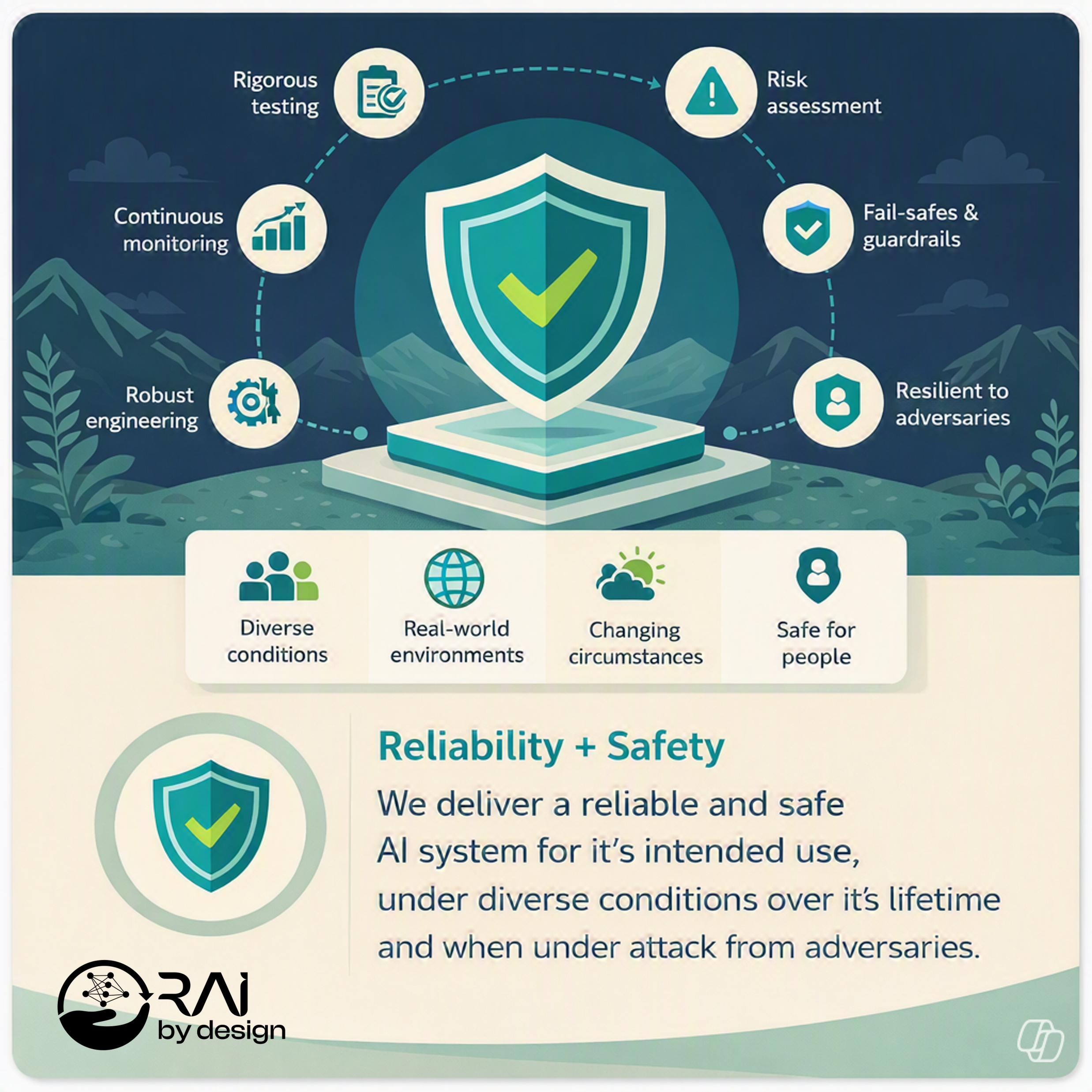
Reliability and Safety are what turn AI from a promising tool into something people can depend on.
Regulators expect AI systems to perform consistently within defined limits, with clear evidence that risks have been tested, understood, and mitigated.
Investors look for confidence that products will behave as intended—not just in ideal conditions, but in the messy reality of scale and change.
For teams building AI, defining acceptable performance, testing rigorously, and planning for failures reduces uncertainty and avoids costly surprises.
And for users adopting AI, reliability and safety mean they can trust outputs in real-world decisions, knowing there are safeguards in place when things don’t go as planned.
We help organisations put practical measures in place—from defining operating boundaries and robust evaluation plans, to monitoring, incident response, and continuous improvement—so your AI systems are dependable, safe, and resilient throughout their lifecycle.
Reliability + Safety topics for consideration:
Intentional design of reliability and safety in your AI system
Reviews of training and test datasets
Documenting critical operational factors
Defining acceptable ranges of operation
Evaluation plans and testing
Failures and remediation
Stakeholder communications
Clear roles and responsibilities (dedicated or fractional)
Continuous monitoring and improvements.
Not sure how reliable and safe your AI needs to be ?
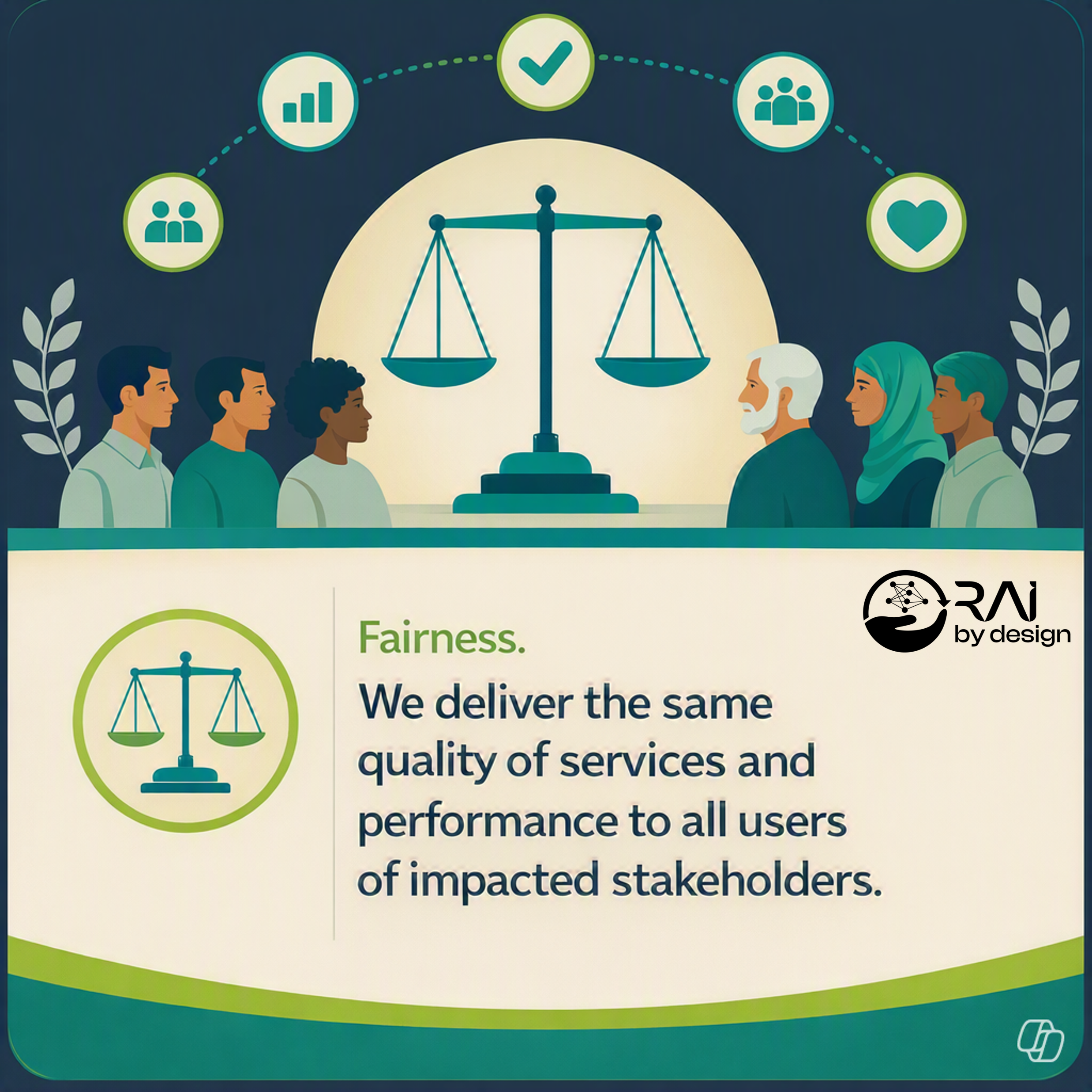
Fairness in AI isn’t just about avoiding bias—it’s about making decisions that stand up to scrutiny and can be trusted across different people and contexts
Regulators expect organisations to identify and mitigate risks of discrimination, particularly in high-impact use cases.
Investors are increasingly looking for assurance that AI products won’t introduce reputational or regulatory risk through unfair outcomes at scale.
For teams building AI, fairness is about understanding data limitations, testing across diverse scenarios, and making deliberate design choices that reduce harm.
And for those users adopting AI, it provides confidence that decisions are consistent, explainable, and equitable.
We help organisations embed practical fairness into the lifecycle—from data review and bias testing to governance, monitoring, and continuous improvement—so your AI systems deliver outcomes that are not only compliant, but fair, responsible, and trusted in real-world use..
Fairness topics for consideration:
Identifying demographic and “at risk” groups
Evaluation plans and testing with inclusive datasets
Allocation of resources and opportunities
Minimization of sterotyping, demeaning and erasing outputs
Communication of risks and performance differences
Stakeholder communications
Clear roles and responsibilities (dedicated or fractional)
Continuous monitoring and improvement
Have you done enough?
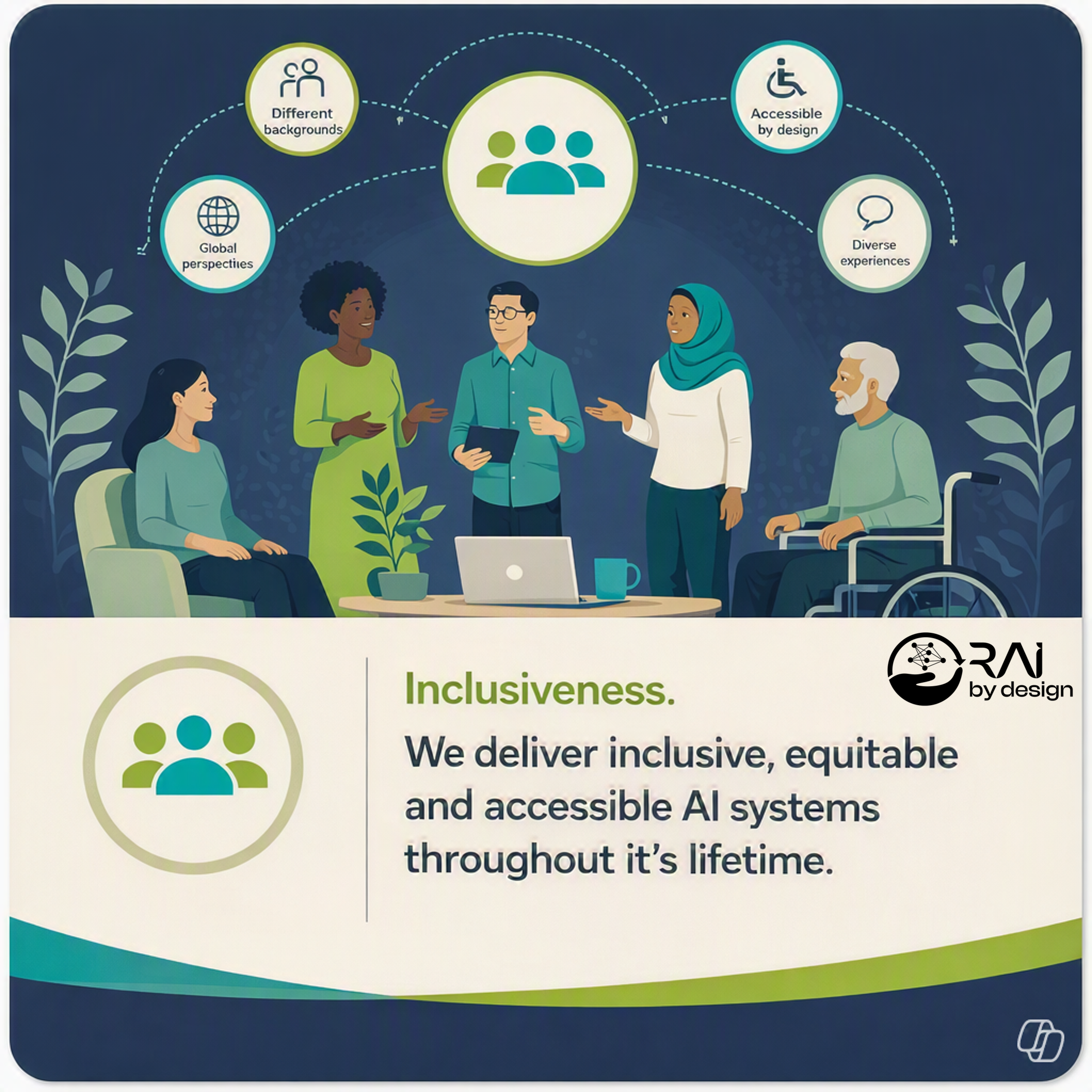
Inclusiveness in AI is about designing systems that work for real people—not just ideal users or limited datasets
Regulators are increasingly expecting accessibility, equitable access, and consideration of diverse user needs as part of responsible AI.
Investors look for signals that AI products can scale across different markets and user groups—without excluding or disadvantaging segments of society.
For teams building AI, inclusive design improves usability, broadens adoption, and reduces the risk of unintended harm.
And for those using AI, it ensures systems are accessible, understandable, and usable in practice.
We help organisations embed inclusiveness throughout the lifecycle—from diverse data and inclusive design practices, to accessibility controls, user testing, and continuous improvement—so your AI systems are not only compliant, but usable, equitable, and trusted by the people they are built for.
Inclusiveness topics for consideration:
Meeting or exceeding accessibility standards and compliance
Inclusive design
Equitable access
Inclusive training and test datasets
Transparency and understandability
Accessibility controls and artefacts
Staff training and capability requirements
Clear roles and responsibilities (dedicated or fractional)
Stakeholder communications
Continuous monitoring and improvement
Have you done everything you should?
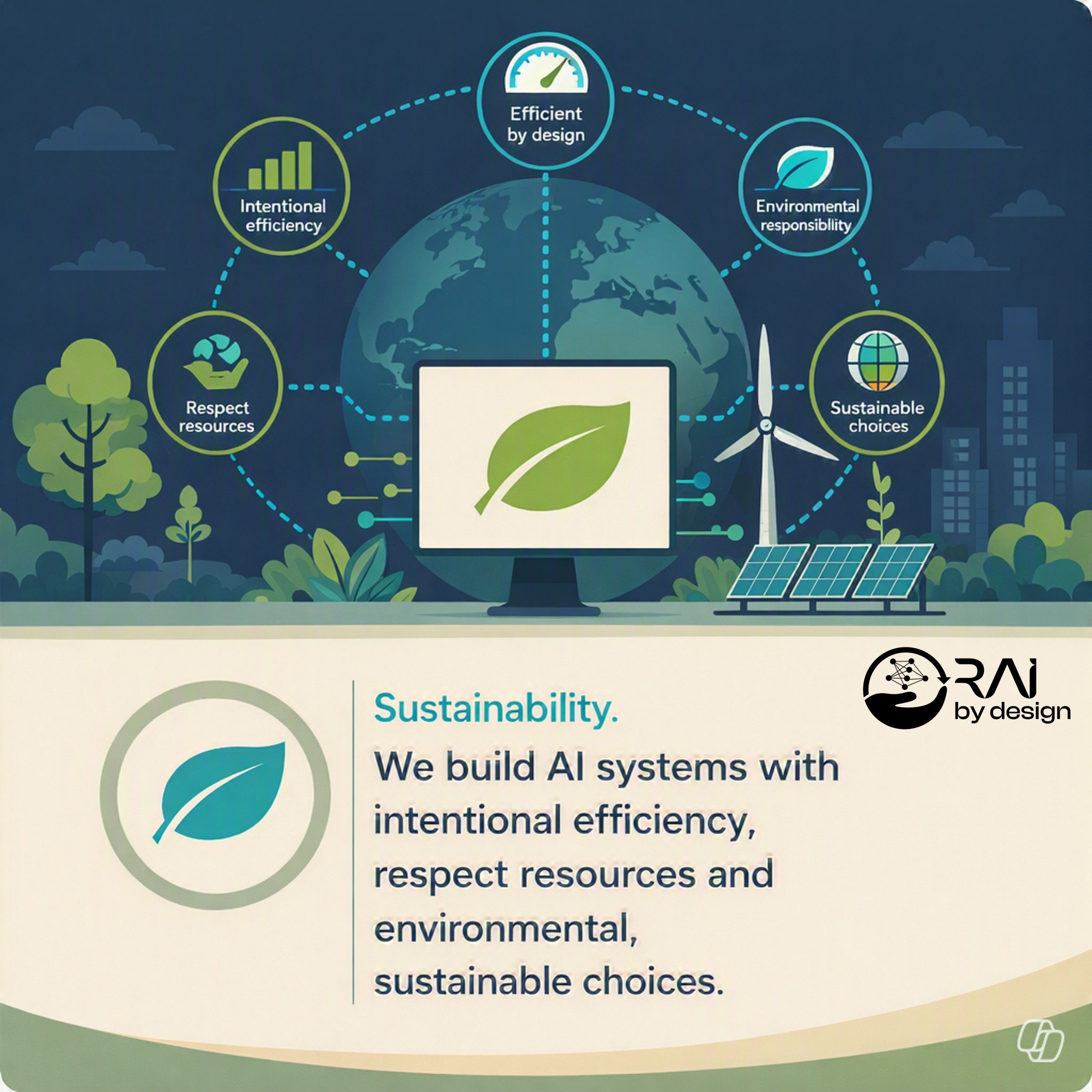
Sustainability in AI is about making deliberate choices—so systems are efficient, scalable, and responsible over time
Regulators are beginning to look more closely at environmental impact, resource use, and how organisations manage the lifecycle of AI systems.
Investors are increasingly interested in whether AI products can scale without excessive cost, compute, or hidden ESG risks.
For teams building AI, treating efficiency as a core design decision reduces waste, controls cost, and improves long-term viability.
And for organisations adopting AI, it ensures solutions are not only effective, but proportionate and sustainable in practice.
We help organisations embed sustainability into the AI lifecycle—from compute efficiency and data minimisation, to infrastructure choices, governance, and ongoing optimisation—so your AI systems are not only compliant, but efficient, scalable, and built with long-term impact in mind.
Sustainability topics for consideration:
Treating compute efficiency as a product decision
Building with lifecycle thinking (but keep it simple)
Use sustainable infrastructure by default
Be intentional about data collection
Right-size your hardware expectations
Build transparency in your product narrative
Consider environmental fairness
Keep governance lightweight (but real)
Clear roles and responsibilities (dedicated or fractional)
Stakeholder communication
Continuous monitoring and improvement